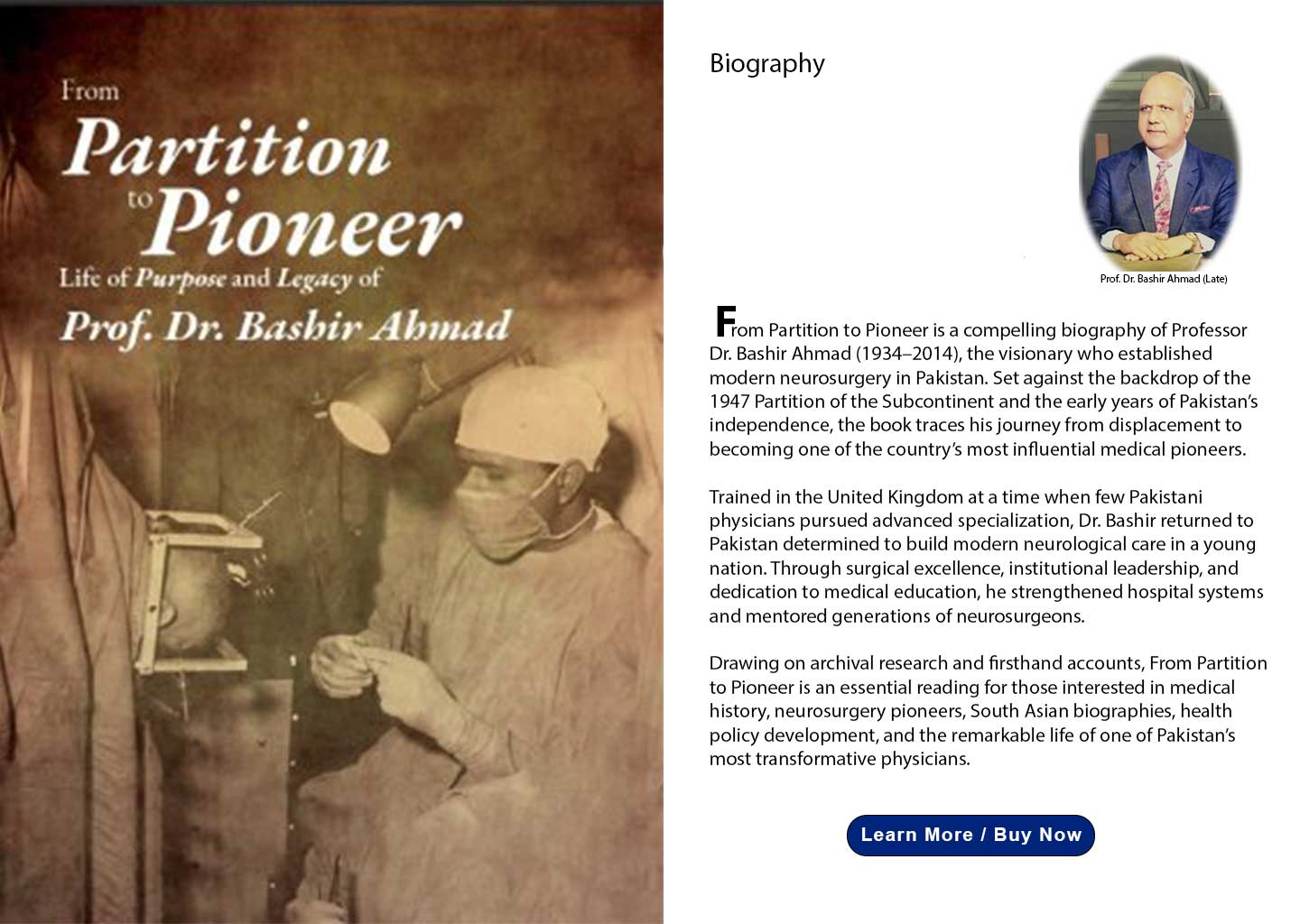

From the turmoil of Partition to the operating rooms of Lahore, the legacy of neurosurgery pioneer Prof. Dr. Bashir Ahmad (1934–2014) stands as a timeless story of resilience, intellect, and devotion to humanity. His life’s work not only built the foundations of modern neurosurgery in Pakistan but also inspired generations of doctors to serve their homeland with purpose and compassion.
Through relentless effort, he transformed Pakistan’s healthcare landscape at a time when resources were scarce but determination abundant, making his story a remarkable case study in healthcare development in Pakistan.
Early Life and Education: From Jalandhar to Lahore
Born on January 1, 1934, in Jalandhar, India, Dr. Bashir Ahmad’s early years were shaped by the turbulence of the 1947 Partition. His family migrated to Pakistan, where he would later emerge as a symbol of medical progress and resilience.
In 1952, he joined King Edward Medical College, Lahore, graduating with his M.B.B.S. in 1957 and showing exceptional skill in surgery and neurology. Seeking specialization, he moved to England for advanced neurosurgical training at the Regional Neurosurgical Centre, Newcastle upon Tyne, University of Durham.
After earning his F.R.C.S., Dr. Bashir Ahmad returned home with a vision to establish and advance neurosurgery in Pakistan a field that was still in its infancy. His remarkable journey, from the early days in Jalandhar to his pioneering work in Lahore, is beautifully chronicled in his biography, “Legacy of a Neurosurgery Pioneer book”, available on MeraQissa and published by Daastan for readers who wish to explore every step of his inspiring story.

Establishment of Neurosurgery Department:
In January 1964, Dr. Bashir Ahmad returned to Pakistan with a mission far greater than personal success. He was appointed Assistant Professor and Incharge of the Department of Neurosurgery at Nishtar Medical College, Multan, becoming the first officially designated neurosurgeon of West Pakistan.
That same year, he performed the first stereotaxic operation for Parkinson’s disease in the entire subcontinent, a groundbreaking feat that positioned Pakistan at the forefront of neurosurgical innovation in Asia.
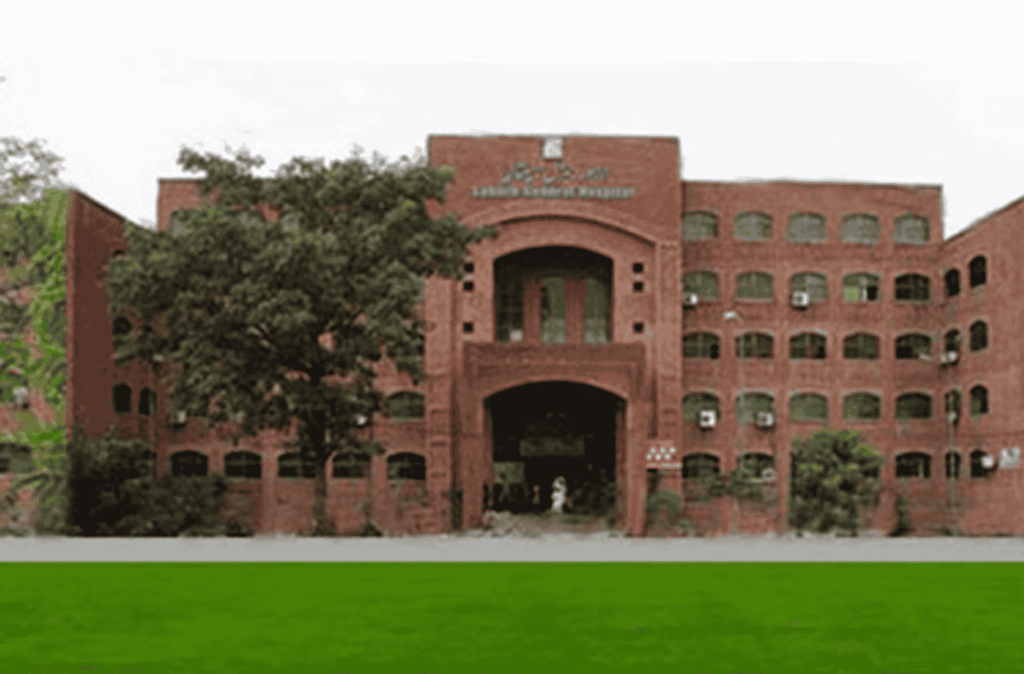
Due to limited hospital facilities in Lahore, Dr. Bashir later shifted the department to Lahore General Hospital (LGH), which at that time was a remote and underdeveloped facility. What began in the old barracks of LGH, through the complete dedication and hard work of Dr. Ahmad, gradually transformed over time. Once an underdeveloped facility, Lahore General Hospital neurosurgery department became the largest and most advanced neurosurgical center in the country. Within just a few years, he established a 150-bed unit equipped with neuro-diagnostic, neuro-radiology, neuro-pathology, neuro-anesthesiology, and neuro-rehabilitation services, setting new standards for specialized medical care in Pakistan.
This transformation reflected not only his skill but his unwavering determination to create something extraordinary from humble beginnings highlighting his significant contribution to the healthcare development in Pakistan.
Technological Innovations
Prof. Dr. Bashir Ahmad’s contributions extended far beyond patient care. He was a visionary innovator, instrumental in medical advancements that were previously unheard of in Pakistan. Many of his pioneering achievements are described in detail in the biography of Dr. Bashir Ahmad, a few of them include:
- Introducing stereotaxic surgery in the subcontinent (1965).
- Performing cryosurgery for the first time in Pakistan (1966).
- Bringing the first CAT Scan (CT scan) for brain and total body to Pakistan in 1981, revolutionizing diagnostic imaging.
Each achievement elevated Pakistan’s standards in medical innovations, positioning Lahore General Hospital as a beacon of neurosurgical excellence. These technological milestones inspired other institutions in Karachi and Islamabad to follow suit, advancing the nation’s medical infrastructure by leaps and bounds.
Through his foresight, Prof. Bashir Ahmad proved that world-class medicine could indeed flourish on Pakistani soil, a cornerstone in the legacy of neurosurgery pioneer.
Academic Excellence and Global Representation
Alongside his clinical and technological achievements, Dr. Bashir Ahmad remained deeply committed to medical education and research. His academic career spanned nearly three decades, during which he held several prominent positions, including:
- Professor of Neurosurgery (1966–1993) at King Edward Medical College
- Principal of King Edward Medical College (1989–1993)
- Visiting Neurosurgeon at Garyounis University, Benghazi, Libya
He represented Pakistan at numerous international forums including the World Federation of Neurosurgical Societies (WFNS), and conferences held in New York, Tokyo, São Paulo, Munich, and Toronto.
With over 40 research papers presented internationally, his work on stereotaxic surgery, trigeminal neuralgia, and Parkinson’s disease received widespread recognition. His leadership earned him the presidency of the Middle East Society of Neurosurgeons (1977–1979) another first for a Pakistani neurosurgeon.
Mentorship and Training
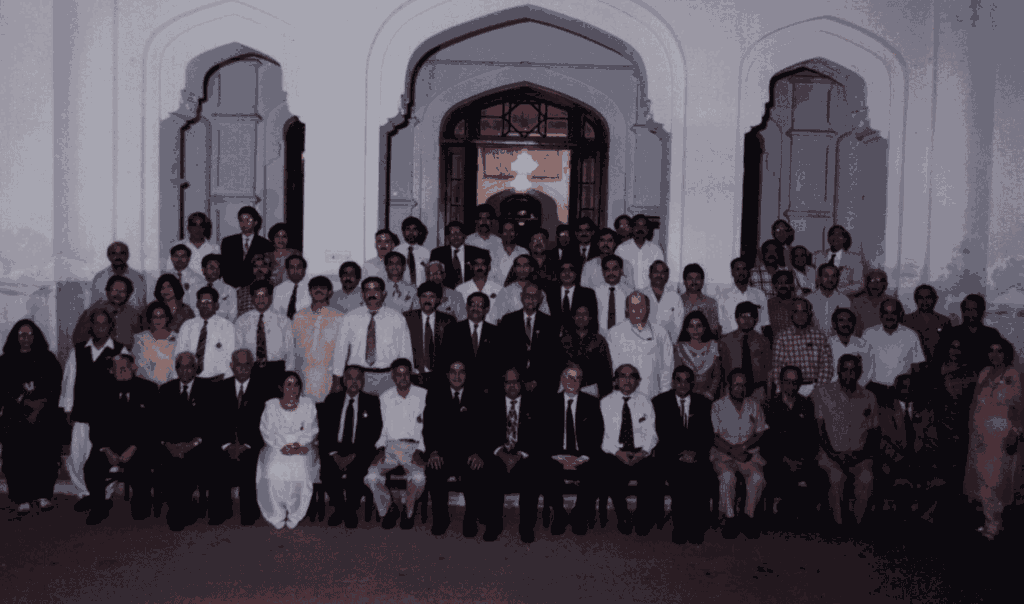
The legacy of neurosurgery pioneer is very well known, remembered, and deeply appreciated by all of his students. Dr. Bashir Ahmad was passionately dedicated to training young neurosurgeons, ensuring that the next generation carried his mission forward.
Many of his students now head major neurosurgical departments across Pakistan and abroad. One of his earliest residents, Dr. Javaid Majeed Mian, succeeded him as Professor of Neurosurgery after his retirement, a testament to the continuity of excellence he fostered.
His students often recall his humility, precision, and patience. Known as “the teacher of teachers,” he instilled in his trainees not only surgical skill but also ethical values, empathy, and a sense of service toward patients. His mentorship remains one of his most enduring contributions to Pakistan’s medical education legacy.
Awards and National Recognition
Over his illustrious career, Prof. Dr. Bashir Ahmad received numerous honors recognizing his extraordinary contributions to the medical field. Among them were the Pakistan President’s Award, Pride of Performance in Neurosurgery (2000), the Lifetime Achievement Award, Pakistan Society of Surgeons (2002), and his promotion to BPS-22, the highest civil service grade (1993).
These awards and honors symbolize his unmatched dedication and lifelong mission to advance patient care and medical education.
For readers interested in exploring his awards and recognitions in depth, his remarkable journey and achievements are beautifully detailed in the biography of Dr. Bashir Ahmad, available on the MeraQissa website.

Humanitarian Vision and Ethical Legacy
Despite his towering professional achievements, Prof. Dr. Bashir Ahmad was known above all for his humanity. Colleagues and students describe him as humble, kind, and deeply compassionate.
He viewed medicine not merely as a profession but as a divine responsibility to serve humanity. His empathy toward patients, regardless of their background, earned him immense respect among peers and the public alike.
When he passed away in 2014, the entire medical community mourned the loss of a legend. His funeral was attended by hundreds of doctors, professors, deans, vice-chancellors, and former students, all paying tribute to the man who had shaped their careers and their conscience.
As Prof. Javed Akram once said, “Prof. Bashir Ahmad was not just a surgeon; he was an institution in himself, a man who built people, departments, and dreams.”
A Lasting Impact: The Institute of Neurosciences
Perhaps the most distinct representation of his vision is the Institute of Neurosciences at Lahore General Hospital, the same hospital where he started with almost nothing in 1964. Today, this institute stands as one of the largest and most advanced neurosurgical centers in Pakistan, serving patients from all over the country.
His pioneering work continues to guide the future of healthcare development in Pakistan, influencing new policies, research initiatives, and academic programs. Every CT scan, every neurosurgical ward, and every trained neurosurgeon in the nation carries a fragment of his legacy.
Family and Personal Life
Behind his professional brilliance was a family equally devoted to medicine and service. His wife was a physician, and all four of his children, two sons and two daughters, along with their spouses, are physicians as well. His family embodies his belief in education, compassion, and community service, continuing his mission to heal and uplift society.
Conclusion: A Legacy Etched in Time
The story of Prof. Dr. Bashir Ahmad is not merely a medical pioneer biography book entry; it is a tale of vision, courage, and service that transcends generations. From performing Pakistan’s first stereotaxic surgery to establishing a world-class neurosurgery institute, he proved that one individual’s passion can transform an entire nation’s medical destiny.
The legacy of neurosurgery pioneer Prof. Dr. Bashir Ahmad reminds us that progress is born not from privilege but from perseverance. His life continues to inspire doctors, researchers, and dreamers who believe that medicine, at its heart, is an act of faith in humanity.
“True pioneers build not just departments, They build nations.”